Happy new year to all of you ZAR4DIN members, I am hoping we will be able to interact more and do a lot of work in the network this year. I look forward to a time when ZAR4DIN will be so big and highly sought after, not all this in one year off course but every step we make counts...
God bless you all....
Thursday, January 6, 2011

Wednesday, November 10, 2010
Friday, November 5, 2010
Friday, November 5, 2010
Zambian Government to Lobby for the Protection of Farmers Against Tobacco Ban
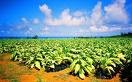
Minister of Agriculture and Cooperatives Eustarckio Kazonga said this yesterday when he officiated at the breakfast meeting held at Pamodzi Hotel, Lusaka for high commissioners and ambassadors accredited to Zambia. The meeting as also attended by the Tobacco Association of Zambia, resentatives of the British American Tobacco and senior government officials from the ministry of Agriculture and Cooperatives.
The Implication of the FCTC is the ban on production, processing and use of certain types of tobacco such as barley in the world. Dr Kazonga noted that the tobacco industry has contributed significantly to the to the country’s economy as seen in the 2010 tobacco marketing season where a total of over 98 million United States Dollars was realized through the sale of over 39 million kilograms. During the same year, the sector employed more than 450,000 people.
Dr Kazonga further added that the implications of the FCTC if implemented will cause damage not only to the farm households that depend on the crop, but the economies of the countries whose strength is in tobacco production and trade.
In the recent past there has been anti-tobacco that has mushroomed to which the WHO through the FCTC has embarked to destabilize the supply chain of tobacco.
Contributed by: Christopher Mbewe

Tuesday, October 19, 2010
ZARI Key Projects Report 2010
Zambia Agriculture Research Institute (ZARI) has undertaken quite a good number of donor funded projects for a good number of years since its inception. The following is an extract of the report submitted by ZARI to the Parliamentary Committee for Agriculture on the current project activities undertaken by the institution.
Projects in ZARI
Projects in ZARI
The following Table highlights some Key Projects which are undertaken with funding from collaborating partners
| No | Title of Programme / Province located | Donor | Duration | Geographical Coverage | Amount Spent |
| 1 | Agriculture Development Support Programme (ADSP); | World Bank | 2007 - 2012 | Country wide | US$ 380,671 |
| 2 | Vulnerability and Resilience of Social – Ecological Systems; | RIHN | 2007-2012 | Southern (Sinazongwe) and Eastern (Petauke) | US$ 47,310.66 |
| 3 | Food Crop Diversification Project (FODIS); | Japanese International Cooperation Agency (JICA) | 2007-2011 | Western, Southern, Eastern and | ZMK 700,000,000 |
| 5 | Fertilizer use and liming recommendations for sustainable crop production in smallholder agriculture in | Alliance for a Green Revolution in Africa (AGRA) | 2010-2013 | Eastern, Southern, Northern and Central Provinces | US$ 458,933 |
| 6 | Integrating Grain Legumes in Maize Based Systems for Improved Soil Health, Food Security and Incomes by Smallholder Farmers in | Alliance for a Green Revolution in Africa (AGRA) | 2010-2013 | Eastern, Southern, Northern and Central Provinces) | US$ 1,081,269 |
| 7 | Development And Promotion of Rice Blast Resistant and Soil Acidity Tolerant Upland Rice Varieties for Sustainable Food Security, Nutrition and Household Incomes in | Alliance for a Green Revolution in Africa (AGRA) | 2010-2013 | Western, Eastern and Northern Provinces | US$ 185,000 |
| No | Title of Programme / Province located | Donor | Duration | Geographical Coverage | Amount Spent |
| 8 | Support an on-going learning process through collection of data on framework conditions of the cotton sector, qualitative data through focus groups, and quantitative data from small monitoring surveys | National Opinion Research Council (NORC) | 2010-2011 | Eastern Province | US$ 88,015 |
| 9 | Small scale cassava processing and vertical integration of the cassava sub-sector in Southern and Eastern Countries – Phase II | International Institute for Tropical Agriculture (IITA) | 2010-2013 | Lusaka, Copperbelt and Luapula provinces | US$ 450,000 |
| 10 | Development of an Effective Information Flow Network for ZARI | International Institute for Communication and Development (IICD) | 2005-2011 | Lusaka and Kasama | €129,000 |
| 11 | Zambia Agriculture Research for Development Information Network | Food and Agriculture Organization of the United Nations (FAO) | 2009-2010 | Country wide | US$47.015 |
| 12 | Promotion of Science and Technology for Agricultural Development in Africa (PSTAD) | Forum for Agriculture Research in Africa (FARA) | 2010-2012 | Country wide | US$160,290 |
| 13 | Building Adaptive Capacity to cope with increasing vulnerability due to climate change | IDRC | 2008-2011 | Sinazongwe and Monze | US$ 170,000 |
| 14 | INTSORMIL Seed Multiplication Project | INTSORMIL | 1995-2015 | Lusaka, Central, Eastern & Luapula Provinces | US$ 25,000 |
| 15 | Biofortified Maize for Improved Human Nutrition | Harvest Plus | 2009-2014 | Central Province (Chibombo) | US$ 50,000 |
| 16 | New Seed Initiative for Maize in Southern Africa | Rockefeller Foundation, Swiss Development Corporation, USAID | 2006-2011 | Lusaka, Central, Northern, Eastern, Luapula and Southern Provinces | US$ 15,000 |
| 17 | Breeding and Germplasm Enhancement | SARRNET | 2008-2011 | Eastern and Luapula provinces | US$ 10,000 |
| 18 | Plant Genetic Resources | SPGRC | 1990-2009 | Lusaka and Luapula provinces | US$ 60,000 |
| 19 | Facilitating the widespread adoption of conservation Agriculture in Maize Based Systems in Eastern and Southern Africa | Germany BMZ | 2007-2012 | Lusaka, Southern and Central Provinces | US$30,000 |
Tuesday, October 12, 2010
SADC To Harmonise Certified Seed Release in the SADC Region
In order to harmonise the Seed Variety Release in the SADC region the countries involved will be using a regional system for variety release. The SPEARS Project has developed a procedural manual based on process management, a tool widely utilized in the public and private sector to streamline operations. It describes the procedures of how applicants may register a new variety that is to be marketed in the SADC region. It also describes the activities defining the “who”, “what”, “when”, “where” and the sequence that should be followed. The activities are directly linked with the flowchart that reflects a visual representation of each procedure.
PROCEDURE MANUAL
AGEEMENT
PROCEDURE MANUAL
AGEEMENT
Tuesday, September 28, 2010
Field Day at National Irrigation Research Station 29th September 2010
For all who are interested in there will be a field day in Nanga, at the National Irrigation Research Station. You will get to see reseach on vegetables and fruit trees as well as research on irrigated maize. The sorghum Breeding programme and the JICA-FoDiS Project will have a few things to show as well.
Monday, September 27, 2010
ZARI and ZAWA partner for SCGIS- Zambia Chapter
A new body of professionals concerned with geographical information systems (GIS), dubbed the Society for conservation GIS (SCGIS)- Zambia Chapter, is in the offing. SCGIS was originally conceived by the Economic and Social Research Institute (ESRI) of the United States of America (USA), in 1995, and has a current total membership running in thousands.
The SCGIS-Zambia Chapter initiative came into being in August, 2009, when scientists and other users of GIS from the Zambia Agriculture Research Institute (ZARI) and the Zambia Wildlife Authority (ZAWA) came together and proposed the formation of a body of professionals affiliated to SCGIS.
The objectives of the organisation are to promote and create awareness among various stakeholders and users of geographical information systems, and share latest information, pertaining to the use of the GIS.
Though membership is currently drawn from ZARI and ZAWA, other users and would-be users of GIS from all sectors of the economy, including students from elementary schools, colleges and universities are encouraged to join. Corporate membership is especially encouraged.
So far, the Zambia Chapter has instituted an executive, with a Mr. Sesele B. Sokotela, a soil survey scientist from ZARI, as its interim President, Mr Chaka of ZAWA, as Secretary General, and a Ms.Grace of The Surveyor General's Office, as its Treasurer. The organisation also boasts of an executive board, with the ZAWA directorate as its current patron.
Since its inception in August, 2009 the SCGIS - Zambia Chapter has conducted a series of awareness meetings countrywide, and recently managed to send a representative to the Annual ESRI Congress in the USA and Canada.
DED, a Germany-based company currently promoting the use of GIS in Zambia is one of the first organisations to partner with the SCGIS-Zambia Chapter. DED is currently preparing to launch the ArchGIS Version 10.
Subscribe to:
Posts (Atom)